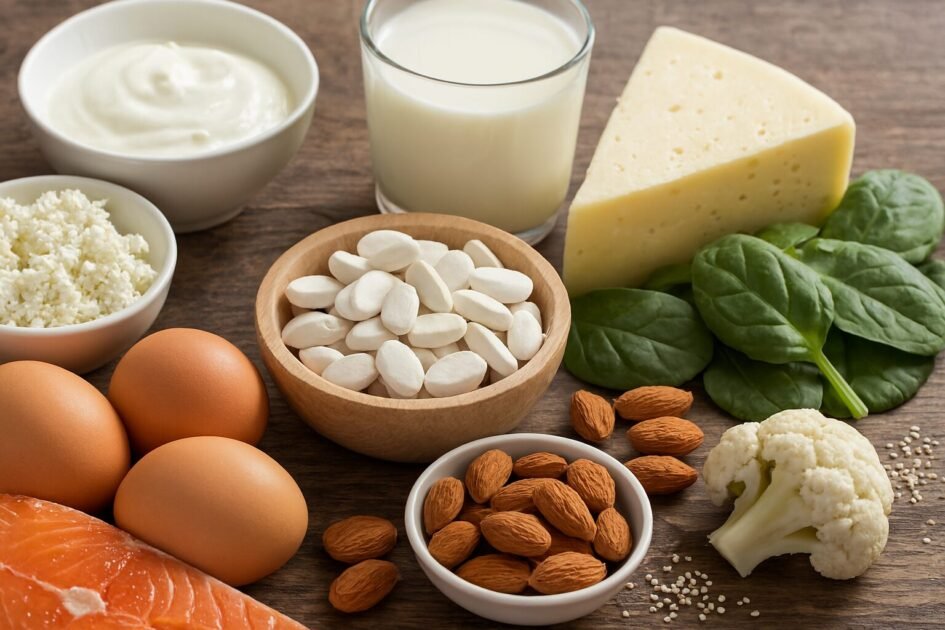
The 10 Best Calcium Sources for Expectant Mothers: A Complete Nutritional Guide
Introduction
Finding the right calcium sources for expectant mothers is one of the most important steps you can take to ensure a healthy pregnancy for both you and your baby. While many people associate pregnancy nutrition primarily with folic acid or iron, calcium serves as the essential building block for your baby’s developing skeletal system, heart, and nervous system.
During these nine months, your body undergoes a remarkable transformation. According to the National Institutes of Health (NIH), pregnant women aged 19 to 50 require 1,000 mg of calcium daily, while pregnant teens (ages 14–18) need slightly more at 1,300 mg.
If your daily intake falls short, your body is designed to prioritize the baby, which means it will actually “borrow” calcium from your own bones to meet the fetus’s needs. To prevent long-term bone density loss and support your baby’s growth, it is vital to consume a variety of bioavailable foods. Experts emphasize that a well-rounded diet is the best way to reach these targets.
In this guide, we will break down the top 10 calcium-rich foods that are safe, delicious, and highly effective for supporting a healthy pregnancy.
Why Quality Matters: Bioavailability in Pregnancy
When choosing the best calcium sources, it is important to understand that not all calcium is created equal. Bioavailability refers to the proportion of calcium that is actually absorbed by your digestive system and used by your body. While a food might be high in calcium “on paper,” your body may only absorb a fraction of it depending on the source and the presence of other nutrients.
During pregnancy, your body’s efficiency in absorbing calcium actually increases naturally, especially during the second and third trimesters. However, to maximize this, you need two critical “partner” nutrients:
Vitamin D: This vitamin acts as the key that unlocks the door for calcium to enter your bloodstream. Without sufficient Vitamin D, your body cannot absorb calcium effectively, regardless of how much you consume. The Mayo Clinic notes that Vitamin D is essential for maintaining bone health and supporting the immune system.
Magnesium: This mineral helps convert Vitamin D into its active form, which then triggers calcium absorption. It also helps keep calcium in the bones and out of the soft tissues.
Furthermore, certain compounds found in healthy foods—such as oxalates in raw spinach or phytates in whole grains—can bind to calcium and prevent absorption. As the Harvard T.H. Chan School of Public Health explains, while these foods are still healthy, it is best to diversify your sources to ensure you are meeting your daily requirements.
By focusing on high-bioavailability foods and ensuring you have adequate levels of “helper” nutrients, you can ensure that the calcium you eat is actually reaching your baby’s developing bones.
The 10 Best Calcium Sources for Expectant Mothers
To help you reach your daily goal of 1,000 mg, here are the most effective and pregnancy-safe ways to fill your plate.
1. Organic Greek Yogurt
Greek yogurt is a standout among calcium sources for expectant mothers because it provides more than just bone-building minerals. It is also packed with probiotics, which can help ease common pregnancy digestive issues and support your immune system. While regular yogurt actually contains slightly more calcium per serving, Greek yogurt offers nearly double the protein—essential for your baby’s tissue and muscle growth.
Calcium Content: Approximately 200–250 mg per 6-ounce serving.
Pro-Tip: Opt for plain, organic varieties to avoid the high sugar content found in fruit-flavored versions. According to Johns Hopkins Medicine, choosing Greek yogurt is also a great way to satisfy ice cream cravings with a nutrient-dense alternative.
2. Hard Cheeses (Pasteurized)
Hard cheeses like Cheddar, Parmesan, and Swiss are among the most concentrated sources of calcium available. The aging process reduces the moisture content, making them very dense in nutrients. For expectant mothers, the most important rule is to ensure the cheese is pasteurized to eliminate the risk of Listeria.
Calcium Content: About 300–330 mg per 1.5-ounce serving (roughly the size of six dice).
Safety First: The American Pregnancy Association confirms that hard cheeses such as Cheddar and semi-soft cheeses like Mozzarella are excellent, safe choices as long as they are made from pasteurized milk.
3. Fortified Plant Milks (Almond, Soy, or Oat)
If you are vegan or lactose intolerant, fortified plant milks are a lifesaver. Because these milks do not naturally contain high levels of calcium, manufacturers add it in during processing—often reaching levels that match or even exceed cow’s milk.
Calcium Content: Typically 300–450 mg per cup (check the label for “fortified”).
Important Note: Always shake the carton before pouring. As noted by The Coombe Hospital, added calcium often settles at the bottom of the container, so a good shake ensures you get the full nutritional benefit in every glass.
4. Dark Leafy Greens (Cooked)
Dark leafy greens like kale, collard greens, and bok choy are nutritional powerhouses. While spinach is famous for its calcium, it also contains high levels of oxalates, which can interfere with absorption. However, collard greens and kale have much lower oxalate levels, making their calcium much more bioavailable.
Calcium Content: Approx. 268 mg per cup of cooked collard greens.
Bioavailability Tip: Cooking or lightly steaming your greens helps break down plant fibers and reduce antinutrients, allowing your body to absorb the minerals more effectively.
5. Canned Sardines & Salmon (with bones)
This is often a surprising source for many, but the tiny, soft, edible bones found in canned sardines and salmon are incredibly rich in calcium. Beyond the minerals, these fish are excellent sources of DHA (Omega-3 fatty acids), which are critical for your baby’s brain and eye development.
Calcium Content: About 325 mg per 3-ounce serving of sardines.
Mercury Safety: Sardines and canned salmon are categorized as “Best Choices” for pregnant women because they are low in mercury.
6. Edamame and Tofu
Soy-based products are a fantastic plant-based calcium source for expectant mothers. Tofu, in particular, can vary in calcium content depending on how it was processed. Look for brands that use calcium sulfate as a firming agent to maximize your intake.
Calcium Content: Up to 434 mg per half-cup of firm tofu (if calcium-set).
Preparation Tip: Edamame (young soybeans) makes for an easy, high-protein snack that provides about 100 mg of calcium per cup, along with a healthy dose of fiber to help with pregnancy-related constipation.
7. Chia Seeds
These tiny seeds are a nutritional “superfood” for pregnancy. Not only are they one of the best plant-based calcium sources for expectant mothers, but they also provide a significant amount of ALA Omega-3 fatty acids and fiber.
Calcium Content: Approximately 180 mg per 2 tablespoons.
How to eat: They are incredibly versatile; you can stir them into yogurt, blend them into smoothies, or make a “chia pudding” for a nutrient-dense dessert. Chia seeds are also excellent for supporting heart health and managing blood sugar.
8. Almonds
Among all nuts, almonds reign supreme when it comes to calcium content. They are the perfect on-the-go snack for busy expectant mothers, providing healthy fats, vitamin E, and protein alongside their mineral content.
Calcium Content: About 75 mg per ounce (about 23 almonds).
The “Nut” Benefit: Regular almond consumption can help maintain healthy cholesterol levels, which is a great bonus for overall maternal cardiovascular health.
9. Figs (Dried or Fresh)
If you find yourself craving something sweet, reaching for figs is a smart way to satisfy your sweet tooth while boosting your calcium levels. Dried figs, in particular, are highly concentrated in minerals and antioxidants.
Calcium Content: Approximately 120 mg per half-cup of dried figs.
Fiber Bonus: Figs are also high in fiber, which the American Journal of Lifestyle Medicine notes is essential for preventing the common pregnancy complaint of constipation.
10. Fortified Orange Juice
For those who struggle with dairy or pills, a glass of fortified orange juice can be an easy way to sip your way to your daily goal. Because the juice is fortified with calcium malate, it is often more easily absorbed by the body than other forms of calcium.
Calcium Content: About 300–350 mg per 8-ounce glass.
Vitamin C Synergy: The natural Vitamin C in the juice helps your body absorb the calcium. Choosing “fortified” versions is an easy way to bridge nutritional gaps without a major change in diet.
Factors that Block Calcium Absorption
While knowing which foods to eat is half the battle, understanding what might prevent your body from utilizing that calcium is equally important. Certain dietary habits and compounds can act as “blockers,” causing the calcium to pass through your system without being absorbed.
Excessive Caffeine: High amounts of caffeine can slightly increase the amount of calcium excreted in your urine. While a morning cup of coffee is generally considered safe, limiting caffeine intake to less than 200 mg per day during pregnancy ensures optimal nutrient absorption and fetal health.
High Sodium Intake: A diet high in salt can be detrimental to your bone health. When your kidneys process excess sodium, they often flush out calcium along with it. To protect your stores, try to limit processed foods and use herbs and spices for flavor instead of table salt.
Phytic Acid and Oxalates: Found in some otherwise healthy foods like raw spinach, beet greens, and whole grains, these compounds can bind to calcium in the digestive tract.
Solution: You don’t need to avoid these foods; simply pairing them with a vitamin-C-rich food or lightly cooking them (as with spinach) can significantly reduce this blocking effect.
By being mindful of these “calcium thieves,” you ensure that the effort you put into eating calcium-rich foods actually results in stronger bones for you and your baby.
Do You Need a Supplement?
While a “food-first” approach is the gold standard for pregnancy nutrition, there are circumstances where reaching 1,000 mg to 1,300 mg of calcium through diet alone becomes a challenge. Severe morning sickness, food aversions, or strict dietary restrictions may make supplements a necessary tool in your prenatal arsenal.
If you are considering a supplement, keep these key points in mind:
Check Your Prenatal Vitamin: Most prenatal vitamins contain some calcium, but usually only about 200–300 mg. This is because calcium is bulky and would make the pill too large to swallow if the full daily dose were included. You will likely still need to bridge the gap with food or an additional supplement.
Types of Calcium: The two most common forms are calcium carbonate (which is less expensive and should be taken with food for better absorption) and calcium citrate (which can be taken with or without food).
The “500 mg Rule”: Your body can only absorb about 500 mg of calcium at one time. If you need a high-dose supplement, it is best to split it into two smaller doses taken at different times of the day to maximize absorption.
Consult Your Healthcare Provider: Before starting any new supplement, always speak with your OB-GYN or midwife. Over-supplementing can lead to kidney stones or interfere with the absorption of other minerals like iron and zinc. As the Mayo Clinic advises, your provider can help you determine the exact dosage based on your specific health history.
Conclusion
Meeting your daily requirements for calcium sources for expectant mothers is a foundational part of a healthy pregnancy journey. By incorporating a diverse range of foods—from creamy Greek yogurt and crunchy almonds to nutrient-dense leafy greens—you are doing more than just protecting your own bone density; you are providing the essential raw materials your baby needs to build a strong skeleton and a healthy heart.
Remember that consistency is more important than perfection. Try to include a calcium-rich component in every meal and snack to ensure a steady supply for your developing little one. With a little planning and the right food choices, you can feel confident that you are giving your baby the best possible start in life.
Frequently Asked Questions (FAQ)
Q. Can I get enough calcium if I am a vegan expectant mother?
A. Absolutely. While dairy is a well-known source, many plant-based foods are excellent alternatives. Focus on fortified plant milks, calcium-set tofu, chia seeds, and leafy greens like kale and collards. A well-planned vegan diet can provide all the necessary nutrients for a healthy pregnancy, though you should monitor your intake closely.
Q. What should I do if I can’t stomach dairy due to pregnancy nausea?
A. Food aversions are very common, especially in the first trimester. If dairy is off the table, try "hidden" calcium sources like smoothies made with fortified orange juice, or snack on almonds and dried figs. If nausea is severe, talk to your doctor about a temporary calcium citrate supplement, which is often easier on a sensitive stomach.
Q. Is it possible to consume too much calcium during pregnancy?
A. Yes. While rare through diet alone, over-supplementation can lead to a condition called hypercalcemia. This can cause constipation, kidney stones, and may interfere with your body's ability to absorb other vital minerals like iron and zinc. The upper limit for pregnant women is generally 2,500 mg per day. Always stick to the dosage recommended by your healthcare provider.
Q. Does my body really “steal” calcium from my teeth and bones for the baby?
A. In a sense, yes. If your dietary intake is insufficient, your body will stimulate a process called resorption to pull calcium from your skeletal stores to ensure the fetus has what it needs. This is why maintaining high-quality calcium sources for expectant mothers is so important—it protects your long-term dental and bone health.