Can Calcium Help Reduce PMS? What the Evidence Really Says
Many women find themselves asking, “Can Calcium help reduce PMS?” as they navigate the monthly cycle of mood swings, bloating, and fatigue. While the wellness market is flooded with “miracle cures” that often lack substance, calcium stands out as one of the few supplements with robust clinical backing. In fact, major health authorities like the Cleveland Clinic explicitly note that calcium can improve PMS symptoms, particularly mood changes, based on clinical studies. The goal of this article is to cut through the marketing noise and review the latest medical evidence to answer a critical question: Is calcium a viable alternative to medication for your cycle?
The Science: What the Latest Research Says
If you are wondering, “Can Calcium Help Reduce PMS?” the short answer from the medical community is a confident yes, though with important distinctions for severe cases. Unlike many wellness trends that rely on anecdotal evidence, calcium’s role in menstrual health is supported by rigorous data.
The Consensus: It Works
A 2025 meta-analysis published in Clinical Medicine of Kazakhstan reviewed multiple randomized controlled trials and confirmed that calcium supplementation significantly reduces the severity of PMS complaints compared to placebo ($p=0.002$). The analysis found that calcium was effective across a broad range of symptoms, including:
Mood: Reductions in depression, anxiety, and irritability.
Physical: A notable decrease in water retention (bloating) and somatic pain.
This aligns with long-standing guidelines from the American College of Obstetricians and Gynecologists (ACOG), which lists calcium as a recommended non-pharmacologic option. The data suggests that women taking 1,000–1,200 mg of calcium daily can see an overall symptom reduction of nearly 50% by their third cycle of use.
Important Nuance: PMS vs. PMDD
While calcium is a powerhouse for standard PMS, the latest research indicates a limit to its power when it comes to Premenstrual Dysphoric Disorder (PMDD)—the severe, disabling form of PMS.
For PMS (Mild to Moderate): Calcium is considered a first-line defense and can often replace the need for medication.
For PMDD (Severe): While calcium does help, head-to-head studies show it is less effective than SSRIs (antidepressants) for managing extreme psychological distress. However, it remains a valuable “adjunct” therapy—meaning it works well alongside other treatments to cover physical symptoms that antidepressants might miss.
The “Why”: The Biological Mechanism
To understand how a mineral can alter your mood, we have to look at the brain-body connection. The reason “Can Calcium Help Reduce PMS” is such a potent question is that calcium isn’t just for building bones; it is a critical signaling molecule in the nervous system.
The Serotonin Connection
The most compelling theory involves serotonin, the neurotransmitter responsible for mood regulation and sleep. Research suggests that calcium levels influence serotonin synthesis. When calcium intake is low, it can dysregulate the hormones controlling calcium (PTH and Vitamin D), which in turn may suppress serotonin activity. This biochemical dip manifests as the classic PMS symptoms: food cravings, irritability, and “the blues.”
The Luteal Phase Drop
Your body’s demand for calcium changes throughout the month.
During the luteal phase (the second half of your cycle, leading up to menstruation), estrogen levels fluctuate. According to research highlighted in the Archives of Internal Medicine, calcium concentrations in the blood can drop during this phase in women with PMS. This creates a state of temporary hypocalcemia (low calcium). Supplementing during this window effectively bridges the gap, preventing the body from sensing a deficiency and triggering the hormonal cascade that causes symptoms.
The Vitamin D Factor
It is impossible to discuss calcium without mentioning its partner, Vitamin D. You cannot effectively absorb calcium without sufficient Vitamin D levels. A study noted by the National Institutes of Health (NIH) indicates that calcium and Vitamin D taken together often produce better results for menstrual health than calcium alone, likely because the Vitamin D ensures the mineral actually reaches the bloodstream where it’s needed.
Action Plan: How to Use Calcium for PMS
Now that we have established that the answer to “Can Calcium Help Reduce PMS?” is affirmative, the next step is implementation. It is not enough to simply pop a pill; the form, timing, and dosage matter significantly for absorption and effectiveness.
The Magic Number
Most clinical trials that showed a reduction in PMS symptoms used a dosage of 1,000 mg to 1,200 mg per day. This aligns with the Recommended Dietary Allowance (RDA) for adult women. It is rarely necessary—or safe—to exceed this amount without a doctor’s supervision.
Food vs. Supplements: A “Food First” Approach
Ideally, you should try to get as much calcium as possible from your diet, using supplements only to close the gap. Food sources provide better bioavailability and come with other essential nutrients.
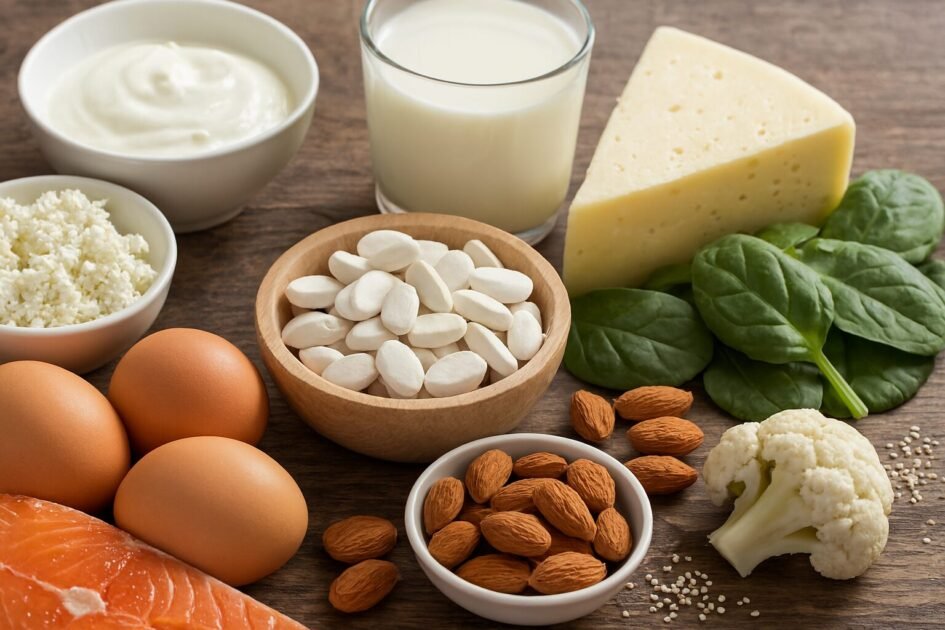
Top Sources: Dairy products (milk, yogurt, cheese), fortified plant milks, calcium-set tofu, leafy greens (collard greens, spinach), and sardines with bones.
Pro Tip: If you rely on plant-based sources like spinach, be aware that oxalates can block absorption. Cruciferous vegetables like broccoli and kale have higher absorption rates than spinach.
For a detailed list of calcium content in common foods, the Dietary Guidelines for Americans provides an excellent reference table.
Choosing the Right Supplement
If you cannot meet your needs through food alone, choosing the right type of supplement is critical. According to the Mayo Clinic, the two main forms differ in how they should be taken:
Calcium Carbonate: This is the most common and affordable form. It requires stomach acid for absorption, so it must be taken with food.
Calcium Citrate: This form is easier to digest and does not rely on stomach acid. It is the better choice if you take acid-blocking medications (like PPIs) or if you have a sensitive stomach. It can be taken with or without food.
The “500 mg Rule” (Split Your Dose)
This is the most common mistake people make. Your body cannot efficiently absorb more than 500 mg of calcium at one time. If you take a 1,000 mg tablet all at once, you will excrete a large portion of it.
The Strategy: Split your intake. Take 500 mg with breakfast and 500 mg with dinner to maximize absorption and keep blood levels stable throughout the day.
Safety & Caveats
While the evidence answering “Can Calcium Help Reduce PMS?” is positive, calcium is a powerful mineral that must be respected. It is not benign; taking it incorrectly can lead to health issues or render other medications ineffective.
“More is Not Better”
There is a distinct upper limit to how much calcium your body can handle. The National Institutes of Health (NIH) sets the Tolerable Upper Intake Level (UL) at 2,500 mg per day for adults ages 19–50. Exceeding this does not provide extra PMS relief; instead, it increases the risk of hypercalcemia (too much calcium in the blood), kidney stones, and potentially arterial calcification (hardening of the arteries). Stick to the 1,000–1,200 mg therapeutic window.
Watch Your Interactions
Calcium is a “binder”—it loves to attach to other compounds in the stomach, which can prevent medications from being absorbed.
Thyroid Medication: Calcium interferes significantly with levothyroxine (Synthroid). You must separate them by at least 4 hours.
Antibiotics: Certain classes of antibiotics (like tetracyclines and fluoroquinolones) will not work if taken with calcium.
Iron Supplements: If you take iron for anemia (common with heavy periods), take it at a different time of day than your calcium, as they compete for absorption.
Consistency is Key
Finally, it is crucial to manage expectations. Calcium is not a painkiller like ibuprofen; it does not work instantly to stop a cramp. It is a preventative nutrient. Experts at the MGH Center for Women’s Mental Health (a Harvard Medical School teaching hospital) note that while calcium is effective, it requires consistent use. Symptom reduction is progressive, meaning you may feel a slight difference in the first month, but the full benefits regarding mood stability and bloating typically peak after 2 to 3 menstrual cycles of consistent daily use.
Conclusion
The question “Can Calcium Help Reduce PMS?” is not just a hopeful query—it is a scientifically validated avenue for relief. For women suffering from the monthly rollercoaster of mood swings, bloating, and fatigue, calcium offers a “Level A” medical recommendation, meaning it is supported by strong, consistent evidence.
While it may not be a complete cure-all for the most severe cases of PMDD, it remains one of the most effective, accessible, and safe natural interventions available. By maintaining a steady intake of 1,000–1,200 mg daily, you can help stabilize your body’s hormonal response and reclaim your well-being.
Your Next Step: Don’t just guess if it’s working. Download a cycle-tracking app or use a simple calendar. Start your calcium regimen today and track your symptoms for the next three months. Note the severity of your mood and bloating on a scale of 1–10. You might be surprised by how much smoother your cycle becomes.
Frequently Asked Questions (FAQ)
Q. Can I just drink more milk instead of taking pills?
A. Absolutely. In fact, food sources are often better because they include other nutrients like protein and Vitamin D. However, you need to be realistic about your intake. To reach 1,200 mg, you would need to consume roughly 3–4 servings of high-calcium dairy (like a glass of milk or a cup of yogurt) every single day. If you are dairy-free or have a smaller appetite, a supplement is usually necessary to bridge the gap.
Q. Should I take Magnesium along with Calcium for PMS?
A. Many experts recommend this combination. While calcium helps with mood and water retention, magnesium is often praised for its ability to relax muscles and potentially ease cramping. The Office on Women's Health suggests that both minerals, along with Vitamin B6, can be part of an effective strategy for managing PMS symptoms.
Q. Does calcium help with menstrual cramps (dysmenorrhea)?
A. While calcium is most famous for reducing emotional symptoms and water retention, it does play a role in muscle tone. Low calcium levels can cause muscle spasms. However, if painful cramps are your primary symptom, you might find more targeted relief by combining calcium with magnesium and heat therapy, as calcium's strongest evidence is for mood and bloating.
Q. Can calcium make me constipated?
A. It can, particularly if you are taking Calcium Carbonate. If you notice constipation, switch to Calcium Citrate, which is generally gentler on the digestion. Additionally, ensure you are drinking plenty of water and getting enough fiber, which is important for overall hormonal balance anyway.